
Pressure Washing Service Costs & Hiring Checklist
Whole-home marketplace estimates span $100–$700; compare cleaning methods, insurance, siding risks and material-specific written quotes.
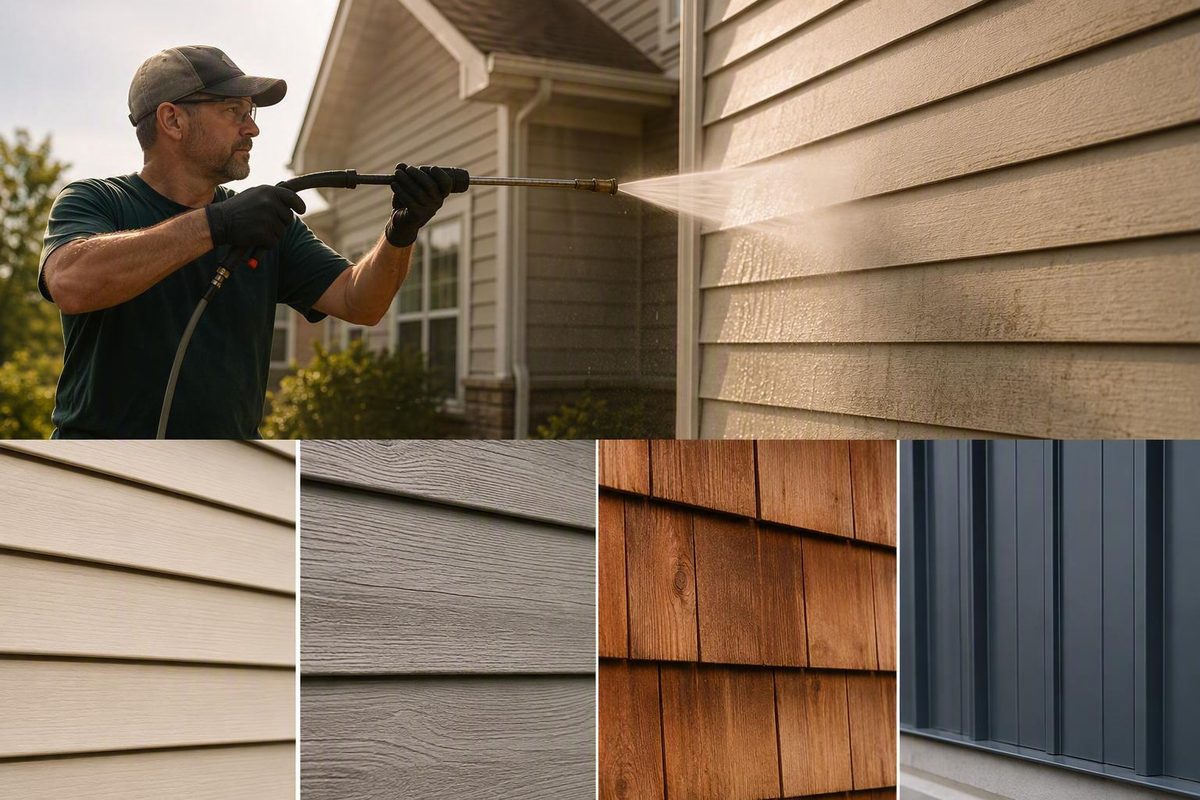
Hiring a pressure washing service is not simply a matter of choosing the lowest price or the contractor with the largest machine. The appropriate method depends on the surface, its condition, the type of buildup, access constraints, and what could happen if pressure, water, heat, or cleaning products are misapplied.
Before requesting quotes, identify each surface and note visible defects such as loose siding, failed paint, cracked mortar, damaged seals, or active leaks. Ask each contractor to propose a written, material-specific method. Comparable scopes—not advertised PSI, star ratings, or promises that one process is “safe for all surfaces”—provide the soundest basis for comparing prices.
Siding Spot is an independent information publisher that compares cladding materials by cost, lifespan, maintenance, and failure modes. It states that it does not sell or install siding, and its published pages do not indicate that it performs pressure-washing work or accepts cleaning bookings. Read about Siding Spot’s editorial focus and independence.
What a pressure washing service can include
“Pressure washing service” is a broad category. Depending on the contractor, it may include conventional cleaning with unheated pressurized water, heated power washing, low-pressure soft washing, or related exterior-cleaning work. Providers do not always use these terms consistently, so the method written into the estimate matters more than the service label.
Common residential scopes include:
- House washing and siding cleaning
- Driveways, sidewalks, steps, and concrete
- Patios, porches, and pool decks
- Wood or composite decks
- Fences and gates
- Exterior gutters and downspouts
- Roof cleaning
- Paver cleaning
- Exterior window cleaning
- Garage floors and retaining walls
Commercial contractors may also quote:
- Building exteriors and storefronts
- Sidewalks and pedestrian areas
- Parking lots and parking garages
- Drive-through lanes
- Dumpster pads
- Graffiti treatment
- Oil, grease, and rust treatment
- Property-management or HOA cleaning
- Recurring maintenance at commercial sites
These are commonly advertised service categories, not evidence that every listed surface should receive high pressure. A contractor offering roof, siding, window, and concrete cleaning should still explain why each surface needs a different procedure.
A professional scope may begin with an inspection of the surfaces, stains, access, and vulnerable areas. The work plan can then cover protection of exposed property, targeted pretreatment, washing, rinsing, cleanup, and a final inspection. Angi describes inspection, protection of plants and HVAC equipment, specialized pretreatment for areas with high levels of mold, mildew, or algae, washing, and cleanup How to Hire Power Washing Services | Angi. See Angi’s overview of a typical service.
Do not assume that every stain treatment is included in ordinary washing. Algae, mildew, dirt, oxidation, grease, oil, rust, graffiti, tire marks, and other deposits may call for different products, heat, repeated treatment, or a separate restoration process. Complete removal should not be assumed.
Ask bidders to distinguish routine washing from specialized stain treatment. A useful estimate should identify:
- The surfaces included
- The visible buildup or stains
- Pretreatments included in the base price
- Treatments priced as add-ons
- Stains expected to be removed
- Stains expected only to improve
- Permanent discoloration or damage excluded from the promised result
- Whether an inconspicuous test area is advisable
This distinction is particularly important for oxidized siding, painted finishes, old concrete, porous pavers, and masonry. An uneven appearance after cleaning may reflect pre-existing fading or deterioration rather than dirt alone, but that limitation should be discussed before work begins.
Pressure washing, power washing, and soft washing are not the same
Industry terminology varies. Best Pick Reports distinguishes pressure washing from power washing primarily by water temperature, while contractors may use the terms interchangeably. Review the method distinction.
Pressure washing generally means cleaning with high-pressure cold or ambient-temperature water. It is commonly proposed for durable surfaces such as sound concrete and selected hardscape.
Power washing generally means pressure cleaning with heated water. Best Pick Reports describes water heated to approximately 140–180°F and associates the method with grease, oil, difficult stains, and heavy buildup. Heat—not reliably higher pressure—is the defining distinction in that description.
Soft washing is a lower-pressure process that relies more heavily on cleaning products, application technique, and dwell time. Contractors commonly market it for siding, roofs, painted finishes, and other surfaces that may not tolerate conventional high-pressure washing. “Soft” does not mean risk-free: product compatibility, dilution, runoff, rinsing, landscaping protection, material condition, and manufacturer instructions still matter.
| Method | Water temperature | Relative pressure | Typical proposed uses | Questions to ask |
|---|---|---|---|---|
| Pressure washing | Cold or ambient | Higher | Sound concrete, selected masonry or hardscape, durable flat surfaces | Is the material sound? What nozzle, flow, distance, and pressure category will be used? |
| Power washing | Heated | Variable | Grease, oil, heavy buildup, and selected durable or commercial surfaces | What temperature will be used? Are the coating, sealant, joints, and substrate compatible with heat? |
| Soft washing | Usually unheated | Lower | Siding, some painted surfaces, roofs, and other delicate assemblies | Which product and dilution are planned? How will dwell time, rinsing, plants, and runoff be managed? |
| Manual or alternative cleaning | Varies | Little or none | Fragile, deteriorated, water-sensitive, or warranty-restricted materials | Would brushing, localized treatment, repair, or no cleaning be safer? |
Do not accept “We will power wash it” as a complete method statement. Ask:
- Will the water be heated?
- What pressure category will reach the surface?
- What nozzle or application tool will be used?
- What flow and spray distance are planned?
- Is pretreatment included?
- Which cleaning products and dilutions are proposed?
- How long will the product remain on the surface?
- How will the surface be rinsed?
- Why is that combination suitable for this material and condition?
These are due-diligence questions, not universal contract requirements. The level of detail needed will vary with the project’s complexity and risk.
Higher PSI is not automatically better. Pressure is only one part of the process. Water flow, distance, spray pattern, heat, chemistry, dwell time, equipment control, material condition, and operator technique all affect the result and the possibility of damage. A machine’s maximum output does not establish that the proposed procedure is appropriate for a house.
A contractor should be able to explain why a greasy concrete pad may benefit from heat and pretreatment while nearby siding calls for lower pressure, controlled application, and careful rinsing. One high-pressure method for every material is a warning sign.
Choose the method by surface—and by condition
The material name is only the starting point. Sound brick is not equivalent to brick with deteriorating mortar. Intact painted siding is different from siding with peeling paint. Uncoated concrete without cracks presents a different problem from an older decorative slab with patches or sealer.
Use this matrix to structure the discussion.
| Surface | Cautious starting point | Important condition checks | What to discuss |
|---|---|---|---|
| Vinyl siding | Low-pressure, siding-specific proposal | Cracks, looseness, oxidation, open seams, failed seals | Spray direction, distance, product compatibility, openings, windows, and outlets |
| Fiber cement, engineered wood, metal, or composite siding | Identify the product and consult manufacturer guidance | Failed coatings, damaged joints, corrosion, swelling, open seams | Manufacturer instructions, coating compatibility, penetrations, and whether powered washing is appropriate |
| Painted siding | Assess the coating before powered cleaning | Peeling, chalking, blistering, age, suspected lead paint | Test area, risk of coating removal, and whether another method is preferable |
| Roof | Manufacturer-compatible procedure only | Roofing type, loose material, granule loss, flashing, leaks, warranty status | Cleaning instructions, product compatibility, access, and runoff |
| Wood decks and fences | Lower-pressure or alternative cleaning after inspection | Rot, splintering, soft fibers, loose boards, failing stain or paint | Test area, grain damage, raised fibers, and preparation for refinishing |
| Brick and mortar | Adapted pressure or an alternative method | Loose brick, cracks, old mortar, deterioration, absorption | Reduced pressure, nozzle choice, test area, and joint protection |
| Concrete | Pressure cleaning may suit sound, uncoated areas | Cracks, spalling, weak patches, coatings, sealers, drainage | Pretreatment, possible heat for grease, test area, and stain limitations |
| Pavers | Surface-specific cleaning with joint protection | Loose units, failed edging, joint sand, sealer condition | Sand loss, runoff, resanding, and resealing exclusions |
| Windows and seals | Protect from aggressive direct spray | Failed glazing, damaged screens, old seals, known leaks | Spray direction, distance, masking, and responsibility for leakage |
| Gutters | Match the method to finish and attachment condition | Loose sections, oxidation, corrosion, leaking joints | Access, downspouts, runoff, and whether interior or exterior cleaning is included |
Siding
Improper pressure or spray direction can damage siding, paint, window seals, and penetrations or force water behind panels. Thumbtack likewise cautions that unsuitable pressure-washer use can damage materials including wood, vinyl, brick, and mortar. See Thumbtack’s service and risk overview.
Ask for a siding-specific plan rather than a general promise to “turn the pressure down.” The proposal should address windows, doors, outlets, lighting, cameras, vents, hose bibs, utility penetrations, and other potential water-entry points.
If you do not know what cladding you have, consult Siding Spot’s comparison of house siding types, maintenance needs, and failure modes before interviewing contractors. Identifying vinyl, wood, fiber cement, engineered wood, or metal siding makes it easier to ask relevant questions and locate manufacturer instructions.
Painted surfaces
Failing paint may be removed by pressurized water, while intact coatings may still be affected by an unsuitable nozzle, heat, cleaning product, or technique. The contractor should document visible chalking, blistering, or peeling before promising a result.
The supplied commercial rental guidance identifies lead paint among the surfaces or conditions to avoid pressure washing. If lead-containing paint is suspected, pause the project and obtain appropriate guidance before allowing powered cleaning or debris-generating work. Review the rental guide’s surface cautions.
Roofs
Do not assume that soft washing is automatically safe for a roof or compatible with its warranty. Identify the roofing product and check the manufacturer’s cleaning and warranty instructions before authorizing pressure, heat, or chemicals.
The contractor should explain the proposed cleaner, application method, access plan, and protection for gutters and landscaping. Roof work also introduces elevated access concerns, so ask who will perform the work, what equipment will be used, and whether the contractor’s insurance covers the planned activity.
Wood decks and fences
Condition can vary across the same wooden structure. Weathered boards, soft fibers, rot, loose fasteners, and failing coatings may react differently to cleaning. Excessive pressure can groove wood, raise fibers, or leave an uneven surface.
Ask for a test area and state whether the purpose is routine cleaning, preparation for stain, or removal of an existing coating. These are different scopes. If refinishing will follow, use the coating manufacturer’s moisture and application instructions rather than a generic drying timetable.
Brick and mortar
Brick may appear durable even when its joints are vulnerable. Taskrabbit warns that full pressure can contribute to deterioration of brick or mortar and advises adapting the setting or nozzle. See Taskrabbit’s surface guidance.
Old mortar, loose bricks, cracks, or highly absorbent masonry justify a condition assessment before powered cleaning. Reduced pressure, a different nozzle, localized treatment, or no powered washing may be the better option.
Concrete and pavers
Pressure washing is commonly offered for sound concrete, but the contractor should still inspect cracks, spalling, weak repairs, coatings, sealers, and drainage. Oil, grease, and rust may need separate pretreatment or heated cleaning, and complete removal should not be promised.
Paver cleaning requires attention to loose units, joint material, edging, and sealer condition. Clarify whether resanding, resealing, or correction of loose pavers is included rather than assuming those tasks are part of washing.
Stop and reassess before washing
Pause the project if you find:
- Loose, cracked, or displaced siding
- Open seams or unexplained wall leaks
- Failing, peeling, or blistered paint
- Suspected lead-containing paint
- Failed window or door seals
- Cracked masonry or loose brick
- Deteriorated mortar
- Rot, soft wood, or unstable decking
- Damaged roofing or active roof leaks
- Electrical components that cannot be isolated from spray
- Water-sensitive assemblies
- A coating, siding, or roofing warranty that has not been checked
- A contractor who cannot explain the proposed method
Cleaning does not repair deterioration. Depending on the defect, repair or specialist assessment may need to come first.
What professional pressure washing may cost
Published prices are marketplace estimates, not Siding Spot rates or guaranteed prices for a particular location.
Thumbtack reports an average house pressure-washing cost of $250, with a typical range of $100–$500. Its size examples are:
| Reported building size | Thumbtack estimate |
|---|---|
| Up to 1,000 square feet | $167 |
| 1,000–2,000 square feet | $242 |
| 2,000–3,000 square feet | $316 |
| 3,000–4,000 square feet | $390 |
| 4,000–5,000 square feet | $501 |
Angi reports a broader $100–$700 range for an entire home and an average of about $310. It also gives $700–$1,800 for three-story homes, illustrating how height and access may affect a quote rather than establishing a universal rate.
The differences do not necessarily mean that one source is wrong.
Quote variables can include:
- Square or linear footage
- Number and type of surfaces
- Material and current condition
- Type and severity of staining
- Number of stories
- Roof pitch or building height
- Ladder, extension, lift, or scaffolding needs
- Vehicle, gate, and hose access
- Travel distance and local labor costs
- Water-flow and equipment requirements
- Heated-water requirements
- Pretreatment and product costs
- Water availability
- Runoff-management needs
- Furniture or property preparation
- Cleanup and final rinsing
- Minimum service charges
- One-time or recurring scheduling
Ask whether the quote is:
- A flat project price
- An hourly rate
- A per-square-foot or per-linear-foot rate
- A minimum charge plus add-ons
- A base wash with separate stain treatments
- A recurring commercial rate
Also ask whether the total includes travel, setup, multi-story access, cleaning products, specialized stain treatment, water, property preparation, cleanup, and taxes.
Obtain at least three written estimates based on the same scope. Give each bidder the same surface list, approximate dimensions, stain information, access limitations, water availability, and desired outcome. A routine wash cannot be compared directly with a quote that also includes rust treatment, lift access, and window rinsing.
A local written quote based on the actual property is more useful than a national average. The average is a budgeting aid; the scope determines value.
How to compare pressure washing contractors
Begin by confirming that the contractor serves your ZIP code and is quoting the actual property. Ask whether the business will use its own employees, send an independent marketplace worker, or subcontract the work. Subcontracting is not necessarily disqualifying, but it should be disclosed.
The written agreement should identify the business responsible for the contract, payment, insurance, and complaints. If a lead-generation platform is involved, determine which company or individual will actually perform the work.
Verify insurance and local requirements
Request current evidence of general liability insurance and, where applicable, workers’ compensation coverage. Confirm that the named insured matches the contracting business and that the policy dates cover the scheduled work. If roof access, lifts, or subcontractors are involved, ask whether the planned activities and workers are covered.
Licensing and registration requirements vary by location and work type. Check with the relevant state, county, or municipal authority rather than assuming that exterior cleaning never requires a license or registration.
Ask about relevant experience
“How long have you been in business?” is useful but incomplete. Ask about the assigned crew’s experience with:
- Your exact siding or surface
- Similar oxidation or deterioration
- The stain being treated
- Multi-story or difficult access
- Nearby landscaping
- The proposed cleaning product
- Painted, sealed, or warranty-covered materials
A company may have extensive concrete-cleaning experience but limited familiarity with oxidized vinyl siding or deteriorated masonry. Request examples that resemble your project, while remembering that selected photographs do not establish typical results.
Compare like with like
Evaluate written quotes across the same categories:
| Comparison point | What to look for |
|---|---|
| Scope | Exact walls, elevations, flatwork, roofs, gutters, or other surfaces |
| Condition | Existing cracks, oxidation, loose paint, weak joints, and vulnerable areas |
| Method | Pressure category, heat, nozzle, pretreatment, cleaner, dwell, and rinse |
| Protection | Plants, windows, outlets, HVAC, vehicles, neighbors, and penetrations |
| Stains | Expected removal, likely improvement, and exclusions |
| Access | Stories, ladders, lifts, gates, parking, and water source |
| Cleanup | Debris, overspray, rinsing, runoff, and replacement of moved items |
| Price | Flat, hourly, unit-based, minimum charge, or add-ons |
| Schedule | Arrival window, expected duration, and weather policy |
| Remedies | Rework, complaints, damage claims, refunds, and deadlines |
Reviews and photographs can help identify questions, but they do not prove typical performance. Prioritize reviews describing comparable surfaces and conditions. Look for detail about communication, property protection, realistic stain expectations, and problem resolution rather than relying solely on star ratings or platform badges.
Read the guarantee, not the slogan
A “100% satisfaction” promise has little practical value without written terms. Ask:
- Who is eligible?
- What result is covered?
- Are stains or pre-existing defects excluded?
- How quickly must a complaint be submitted?
- Are photographs or an inspection required?
- Is rework the only remedy?
- Are refunds available?
- Who is responsible for property damage?
- Is subcontracted work covered?
- How long does the promise remain in effect?
Also ask contractors to define terms such as “eco-friendly,” “biodegradable,” “plant-safe,” or “pet-safe.” Request the product name, planned dilution, handling precautions, and runoff approach. Marketing adjectives are not substitutes for product information and a documented procedure.
Red flags
Proceed cautiously if a contractor:
- Uses conflicting business names, addresses, or phone numbers
- Refuses to provide insurance documentation
- Will not give a written scope
- Recommends the same high-pressure method for every material
- Cannot explain temperature, nozzle, products, or pretreatment
- Guarantees removal of every stain
- Calls every product safe without identifying it
- Dismisses roofing, siding, paint, or sealant instructions
- Will not disclose subcontracting
- Omits property protection
- Pressures you to book before obvious defects are assessed
- Demands full payment before defining the work
- Relies solely on reviews, badges, or selected photographs
The best proposal is not necessarily the longest, but it should be specific enough that both parties understand the procedure, limitations, price, and available remedies.
What the written estimate and work plan should say
A verbal promise leaves substantial room for disagreement. The checklist below combines essential contract information with prudent due-diligence requests. Not every technical detail will apply to every project.
Copy-ready quote checklist
- [ ] Property address and contractor’s legal business name
- [ ] Contractor contact information
- [ ] Surfaces and elevations included
- [ ] Measured or estimated area
- [ ] Materials being cleaned
- [ ] Existing condition of each surface
- [ ] Known stains or buildup
- [ ] Cleaning method proposed for each surface
- [ ] Whether water will be heated
- [ ] Relative pressure category and application approach
- [ ] Nozzle or specialized attachment, where relevant
- [ ] Cleaning product and intended dilution, where available
- [ ] Pretreatment and dwell plan
- [ ] Rinse procedure
- [ ] Test-area agreement, if appropriate
- [ ] Property-protection responsibilities
- [ ] Water and power requirements
- [ ] Runoff-management approach
- [ ] Access equipment included
- [ ] Setup and cleanup included
- [ ] Expected stain outcome
- [ ] Explicit exclusions
- [ ] Flat, hourly, area-based, or minimum-charge pricing
- [ ] Add-ons and possible change-order triggers
- [ ] Estimated total and taxes
- [ ] Deposit and payment schedule
- [ ] Proposed date and weather policy
- [ ] Estimated duration
- [ ] Guarantee, rework, and complaint terms
- [ ] Property-damage procedure
- [ ] Applicable insurance information
- [ ] Customer and contractor authorization
Require material-specific details
The work plan should say more than “pressure wash house.” It should describe the selected process for each material.
Examples include:
- Vinyl siding: low-pressure application, identified cleaner, controlled dwell, rinse direction intended to avoid forcing water behind laps, and protection for outlets and openings.
- Concrete driveway: pretreatment for identified oil spots, cleaning of sound areas, runoff planning, and no guarantee for permanent discoloration.
- Wood deck: test area, lower-pressure or alternative procedure, grain-protection measures, and coordination with any planned coating.
- Brick wall: mortar inspection, adapted nozzle and pressure, limited test area, and exclusion of loose or deteriorated joints.
- Roof: manufacturer-compatible procedure, product details, access equipment, runoff planning, and acknowledgment of relevant warranty instructions.
A universal PSI number is not necessarily useful because distance, nozzle pattern, water flow, material condition, and technique also matter. The important question is whether the contractor can define and justify a controlled process.
Document the protection plan
Clarify how the crew and customer will address:
- Plants, soil, and lawns
- Pets and pet areas
- Windows, doors, screens, and seals
- Painted or coated surfaces
- Electrical outlets and service equipment
- Exterior lights and cameras
- HVAC equipment and air intakes
- Vehicles and bicycles
- Grills, furniture, toys, and decorations
- Irrigation controls
- Neighboring property
- Wall and roof penetrations
- Openings beneath siding laps
- Ponds, pools, and water features
“Customer will move all items” is not a complete plan. The estimate should distinguish what you must prepare from what the crew will cover, disconnect, avoid, rinse, or monitor.
Address water and runoff
Confirm whether the contractor expects to use your exterior water connection. If none is available, ask whether the company can bring water, whether its equipment needs a particular flow, and how that affects the price.
Discuss where wash water is expected to travel and how cleaning products, loosened debris, oil, or other contaminants will be kept away from neighboring property and drainage openings. Ask the contractor whether any local requirements apply, then verify consequential questions with the appropriate local authority rather than relying on a general online guide.
For commercial work involving grease, dumpster pads, parking areas, or graffiti, runoff planning may materially affect equipment, scheduling, and price.
Record pre-existing conditions
Before work begins, photograph:
- Cracks
- Loose or warped siding
- Oxidation and fading
- Failed caulk or seals
- Chipped or peeling paint
- Damaged screens
- Loose fixtures
- Deteriorated mortar
- Spalled concrete
- Roof defects
- Vulnerable or unhealthy plants
Wide photographs establish location; close-ups show condition. Dated records are a prudent way to distinguish pre-existing deterioration from a newly reported problem and allow the contractor to modify the method before starting.
Define the expected result
Classify stains and conditions in writing:
- Expected to be removed
- Expected to improve but possibly remain visible
- Excluded from the promised result
This is particularly useful for oxidation, rust, oil, grease, old paint, efflorescence, absorbed stains, and discoloration caused by aging. If restoration, resanding, resealing, painting, or recoating is required, quote that work separately.
Also document the complaint process: whom to contact, the notice deadline, required evidence, inspection procedure, rework terms, refund conditions, and applicable insurance information.
Prepare for service and inspect the finished work
Ask whether an adult must remain home. At least one provider says customers may be absent when the crew has access to the work area and water, but policies differ. Confirm your contractor’s requirements in writing.
Verify water and power needs before the appointment. Taskrabbit says providers generally bring machines, hoses, and cleaning solutions but typically need access to an outdoor water source. Equipment arrangements vary, so confirm what the selected contractor will supply.
Typical preparation tasks include:
- Move vehicles away from the spray and runoff area.
- Relocate furniture, grills, toys, tools, planters, and decorations.
- Close and latch windows and doors.
- Unlock gates and provide agreed access.
- Mark leaks, loose materials, and known defects.
- Identify outlets, lights, cameras, vents, and irrigation controls.
- Point out delicate or newly planted landscaping.
- Keep pets indoors or in an unaffected area.
- Keep children and bystanders away from the work zone.
- Confirm that neighboring property will not be blocked or sprayed.
Timing varies by project. Thumbtack reports that house washing may take about 30 minutes to several hours, in addition to setup and packing. Taskrabbit estimates approximately two to four hours for an average driveway and modest patio. These estimates describe different jobs and are not promises. See Taskrabbit’s equipment and timing guidance.
Weather, stains, access, water flow, setup, pretreatment, dwell time, and delicate materials can all alter the schedule. Discuss what happens if wind, freezing conditions, rain, heat, or another condition makes the planned application unsuitable.
Inspect before final payment
When the work is complete:
- Walk the property with the crew leader.
- Compare the result with the pre-service photographs.
- Inspect from several angles and in consistent lighting where possible.
- Check corners, lower edges, upper stories, trim, and areas behind downspouts.
- Look for missed sections, streaks, disturbed joint material, lifted paint, leaks, damaged plants, or loosened components.
- Confirm that windows, fixtures, furniture, and gates were restored as agreed.
- Verify that debris and temporary runoff controls were removed appropriately.
- Report concerns under the written complaint procedure.
- Photograph any issue before its appearance changes or the surface dries.
Do not treat every remaining mark as evidence of incomplete cleaning. Compare the result with the written stain expectations. Fading, oxidation, coating failure, or deeply absorbed contamination may remain after washing.
If cleaning precedes painting, staining, or sealing, follow the coating manufacturer’s moisture and drying requirements. Angi suggests allowing washed siding a couple of days to dry thoroughly before painting, but the appropriate interval may differ with the material, coating, weather, and moisture retained in joints or behind panels.
DIY or hire a professional? Use a risk-based decision
Neither DIY work nor professional service is automatically the better choice. Consider project size, height, surface condition, access, equipment needs, available time, your experience, and the consequences of an error.
A small, flat, durable surface is the more plausible DIY candidate. An example might be a limited area of sound, uncoated concrete where you understand the equipment, can manage water flow, and can test the method in an inconspicuous location.
Projects that more strongly justify specialist assessment include:
- Roofs
- Multi-story walls
- Siding
- Windows and seals
- Painted finishes
- Old or deteriorated masonry
- Fragile or water-sensitive surfaces
- Chemical work beside landscaping
- Large commercial areas
- Oil, grease, rust, or graffiti treatment
- Surfaces requiring soft washing
- Areas near electrical equipment or air intakes
A pressure-washing provider’s safety overview identifies eye injuries from loose debris Professional vs DIY Pressure Washing: Why Experts Win. Because the source is a commercial provider, treat it as a hazard summary rather than independent safety certification. Review the provider-published safety discussion.
Reported property risks include gouged or cracked siding, etched concrete, water behind siding, damaged window seals, removed paint or mortar, harmed plants, and uneven results. Hiring a contractor does not eliminate such risks; it changes who selects the process and may provide contractual or insurance remedies if damage occurs.
Build a complete DIY budget
Do not compare a contractor’s full quote with the rental price alone. Include:
- Pressure-washer rental
- Security deposit or damage waiver
- Detergent and stain treatments
- Nozzles and attachments
- Extension equipment
- Hoses and adapters
- Protective clothing, gloves, footwear, and eye protection
- Water consumption
- Transportation and fuel
- Pickup and return time
- Setup and testing
- Active cleaning time
- Cleanup and storage
- Runoff-control or disposal materials
- A second rental day if needed
- Potential rework
- Repairs if the surface or nearby property is damaged
One pressure-washing company gives a promotional estimate of $60–$100 per day for a rental and approximately $120 or more for a sample DIY project after supplies and water. Prices vary by location, machine, rental terms, and project, and the publisher sells professional cleaning services, so the figures are not a neutral national benchmark. See the provider’s sample DIY budget.
Professional and DIY estimates also tend to use different assumptions. A contractor may include transport, equipment, setup, products, labor, and cleanup, while a DIY estimate may omit time, extra rental days, or rework. Conversely, a contractor’s base price may exclude specialized stain treatment. Price alone cannot settle the decision.
The practical question is whether you can complete the specific job with controlled risk. DIY may be reasonable for a small, sound, durable surface. Siding, roofs, elevated work, deteriorated materials, and chemically dependent soft washing warrant greater caution and may justify qualified assessment.
Frequently asked questions
How much does a pressure washing service cost?
Marketplace estimates place whole-home service broadly around $100–$700. Thumbtack reports a $250 average and a typical $100–$500 range, while Angi reports an average near $310 within a $100–$700 range. These are marketplace estimates, not guaranteed local rates. Review Thumbtack’s cost estimates.
Your quote will depend on size, material, condition, staining, stories, access, location, equipment, pretreatment, water availability, and cleanup. Obtain at least three estimates based on the same written scope.
What is the difference between pressure washing, power washing, and soft washing?
Pressure washing generally uses high-pressure cold or ambient-temperature water. Power washing adds heated water and may be proposed for grease, oil, and heavy buildup. Soft washing uses lower pressure and relies more heavily on cleaning products and dwell time.
Because contractors use these terms inconsistently, ask about the actual temperature, pressure category, nozzle, flow, cleaning product, dilution, dwell time, and rinse procedure.
Can siding be pressure washed safely?
Some siding can be cleaned with powered equipment when the process is matched to the exact material and condition, but conventional high pressure is not automatically appropriate. Poorly selected or directed spray can damage siding, coatings, seals, openings, or the assembly behind the cladding.
Ask for a low-pressure, siding-specific plan and confirm applicable manufacturer instructions. If the siding is loose, cracked, oxidized, leaking, or covered by uncertain warranty terms, stop and investigate before authorizing cleaning.
How often should a house be pressure washed?
There is no universal schedule. Some contractors and marketplaces suggest annual washing as a rule of thumb, but their recommendations are general and do not apply to every material or property.
Base the decision on visible buildup, climate, shade, vegetation, traffic, cladding type, coating condition, and manufacturer maintenance guidance. A condition-based inspection is more useful than an automatic calendar interval.
Does Siding Spot offer pressure washing services?
No pressure-washing service is indicated on Siding Spot’s published pages. Siding Spot is an independent educational website that compares residential siding materials and states that it does not sell or install siding.
Use Siding Spot to identify your cladding and understand its vulnerabilities before interviewing local exterior-cleaning contractors. For cleaning work, obtain material-specific written quotes from qualified providers serving your property.
Before booking, identify the material and visible defects, obtain at least three comparable written scopes, verify locally applicable credentials and insurance, and document the cleaning method, property protection, stain limitations, runoff approach, and damage-remedy terms. The appropriate process begins with the surface and its condition—not the contractor’s maximum PSI.