
Home Siding Repair: Choose the Right Fix and Scope
Compare siding repair options by material, spot hidden-water warning signs, and learn what a complete repair quote should include.
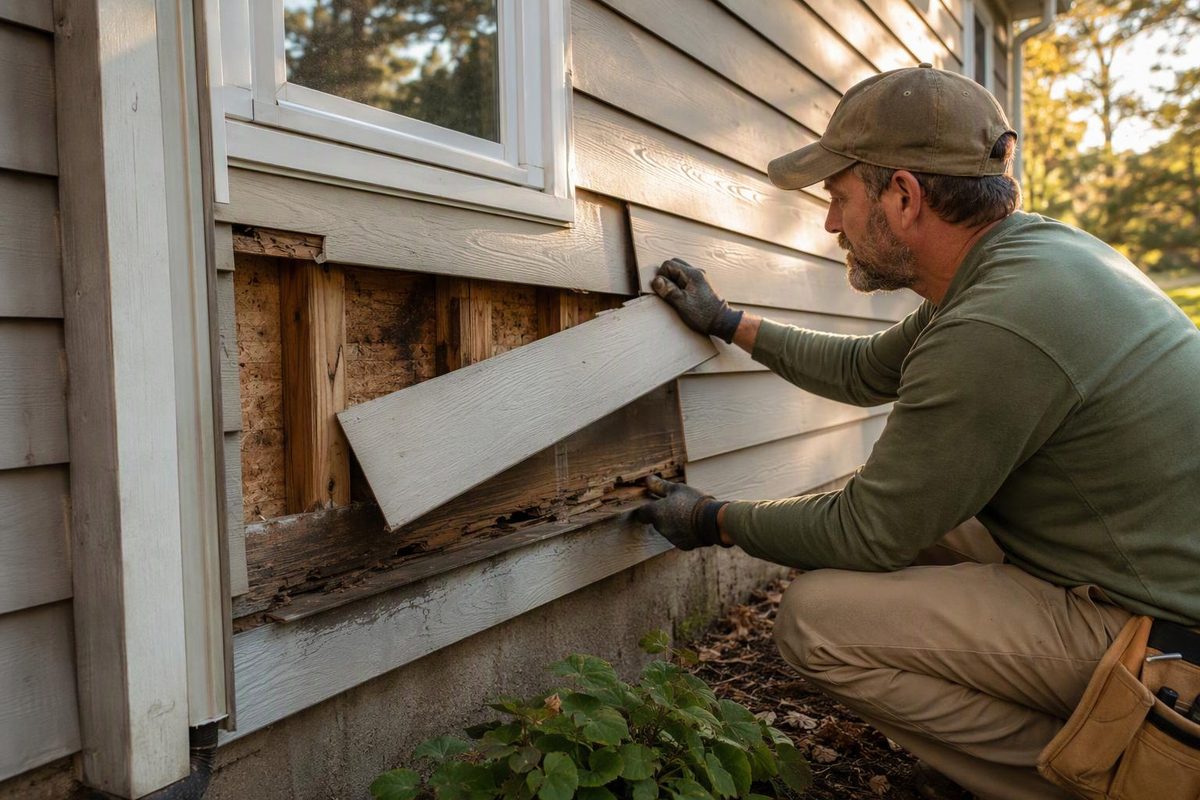
Home siding repair can mean touching up a finish, replacing one damaged panel, or opening a wall to correct a leak. Those are different jobs. Choose the smallest repair that restores both the siding and the wall’s water-management details—not simply the smallest visible patch.
An isolated impact mark on otherwise sound siding is a reasonable candidate for spot repair. Recurring damage, soft wood, or staining below a roof-to-wall junction calls for investigation before you buy filler or replacement boards.
First decide whether the problem is cosmetic or involves the wall
Start with photos of the damage and the surrounding wall. Note the material, approximate affected area, height above ground, and whether the problem appeared after a storm or has returned after an earlier repair. Check nearby gutters, roof intersections, windows, and trim rather than inspecting only the damaged spot.
These findings help separate the repair scopes:
| What you find | Sensible next step |
|---|---|
| A small finish chip, with the underlying material intact | Check the manufacturer’s touch-up method. |
| One broken board or panel, with adjacent siding sound | Price localized replacement and inspection of the exposed wall. |
| Soft or crumbling wood, recurring stains, or interior moisture near the damage | Investigate the moisture source and concealed damage before closing the wall. |
| Similar failures across one wall or several elevations | Compare spot repairs with elevation or whole-house replacement. |
A clean-looking exterior does not rule out concealed water damage. Pacific Northwest National Laboratory’s building guidance explains that vinyl and fiber cement can mask leakage at roof-wall intersections for years. Its retrofit guidance calls for repairing damaged sheathing and properly integrating flashing with the existing house wrap before replacing siding. PNNL roof-wall flashing guidance
That distinction matters financially: replacing the visible board without correcting the leak leaves the cause untouched.
Match the repair to the siding material
Vinyl: preserve the panel’s ability to move
For a broken horizontal vinyl panel, replacement is a documented repair method. Georgia-Pacific’s installation guide describes unlocking the panel above with a zip tool, removing the damaged panel’s fasteners, installing the replacement, and relocking the upper course. The replacement must remain free to move side to side. Follow your product’s instructions if they differ. Georgia-Pacific installation guide, page 59
Before purchasing, confirm the profile, dimensions, locking shape, and color—not just the word “vinyl.” Compare a sample against the installed wall to judge the match.
Do not use caulk or face screws as a universal fix for loose siding. Georgia-Pacific’s basic rules prohibit caulking overlap joints or panels where they enter corner and trim receivers, and generally prohibit face-nailing because vinyl expands and contracts. Georgia-Pacific installation guide, page 12
For a small hole rather than a broken panel, see our vinyl siding patch-versus-replacement guide.
Fiber cement: distinguish a small surface defect from a broken plank
James Hardie permits cementitious patching compound for small cracks, chips, and dents in its siding. It also offers product-specific touch-up materials for ColorPlus finishes. That is not blanket approval to fill a split, loose, or badly damaged plank. Have those conditions assessed for replacement, including the fastening and surrounding boards. James Hardie siding-care FAQ
Check the instructions for your actual brand and finish. A patch that restores the surface still does not establish that the wall behind it is dry; our fiber cement durability guide explains that distinction.
Solid wood: repair sound material, replace decayed sections
Small cracks in sound, dry wood may be candidates for exterior-grade filler and refinishing. Rotted sections require removal back to sound wood; extensive damage calls for replacement boards rather than covering weakened material with paint. Lowe’s wood siding repair guide
For cedar, do not confuse weathered color or a failing coating with a failed board. The cedar industry’s restoration guidance calls for addressing damage, dirt, and mildew before refinishing, and warns that power washing can seriously damage wood and compromise finish adhesion. Real Cedar restoration guidance
Engineered wood: follow the product’s repair limits
LP SmartSide ExpertFinish instructions allow small construction dents and gouges to be filled with caulk meeting ASTM C920, minimum Class 25, followed by priming if required and painting. They also require exposed wood substrate to be sealed with paint or caulk. Those instructions should not be extended to swollen, delaminated, or extensively damaged boards without a product-specific assessment.
Drainage gaps matter here too: LP says not to caulk the gap above drip-cap flashing. Filling every visible opening can conflict with the intended installation. LP ExpertFinish care and maintenance instructions
Metal: separate coating damage from panel damage
For scratches, ask the manufacturer which touch-up coating is compatible. ABC’s metal-panel guidance recommends manufacturer-approved touch-up paint and specialist assessment for holes or separating seams. Its guidance covers metal roofs and walls; use your particular siding system’s instructions for the repair itself. ABC metal-panel maintenance guidance
A dent deserves inspection rather than an automatic replacement decision. Ask whether it affects only appearance or also a seam, attachment, or coating—and whether a matching replacement panel is available.
When to hire rather than patch it yourself
Keep DIY work limited to accessible, isolated damage where you can identify the product and follow its repair instructions. Hire a siding contractor for concealed moisture, damaged sheathing, repeated failures, difficult access, or repairs involving window or roof flashing. Specify who is responsible for the leak correction if both roofing and siding trades are involved.
Older materials need a separate safety check. Before disturbing paint on a pre-1978 U.S. home, assess the lead risk; EPA recommends a lead-safe certified contractor. Suspected asbestos-containing material should not be sawed, sanded, drilled, or sampled yourself—EPA recommends a trained, accredited asbestos professional. EPA lead-safe renovation guidance · EPA asbestos guidance
Budget for the complete repair, not the replacement board
For a broad U.S. planning reference, HomeGuide’s February 9, 2026 guide reports average siding repairs of $200–$1,100, based on research and member-reported project costs. This is a marketplace estimate, not a local bid or a reliable allowance for concealed rot. HomeGuide siding repair costs
Request a written quote that identifies:
- Repair area: the wall, panel count or square footage, and trim included.
- Replacement product: manufacturer, profile, finish, and expected color match.
- Access and removal: ladders or scaffolding, adjacent siding removal, and disposal.
- Wall work: house-wrap repairs, flashing corrections, and any known sheathing damage.
- Unknown damage: unit prices or a written change-order process, with photos before covering it.
- Finishing and closeout: sealants where specified, painting or touch-up, cleanup, and workmanship warranty.
Also confirm with the local building department whether your repair scope requires a permit, and specify who will obtain it.
If spot repairs would leave many mismatched patches or repeat the same labor across one wall, request an elevation-replacement alternative. Whole-house replacement is a separate decision, not an automatic consequence of one damaged area; compare the scopes using our guide to when to replace siding.