
Bevel Siding: Profile, Materials, Cost and Failure Risks
Learn what bevel siding is, how cedar and engineered versions differ, which installation details matter, and how to compare complete quotes.
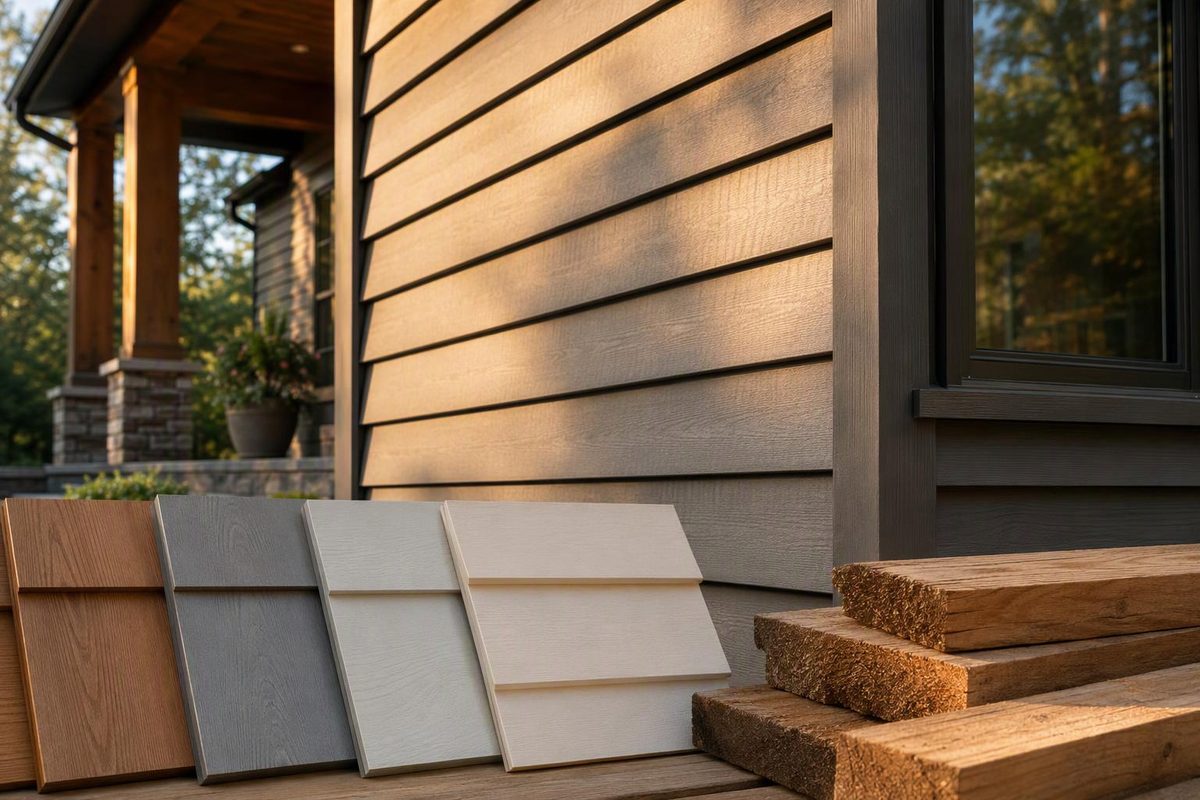
Bevel siding consists of horizontal boards with a thin upper edge and a thicker lower edge. Each course overlaps the one below, producing the shadow lines associated with traditional clapboard houses. The Western Red Cedar Lumber Association says its solid-wood bevel boards are made by resawing lumber at an angle, creating two tapered pieces from one board (Real Cedar).
The important purchasing distinction is that bevel describes the board shape, not one specific material. A quote might cover solid cedar, finger-jointed cedar, another wood species or an engineered-wood lap product with a beveled edge. Fiber-cement and vinyl lap siding can offer a similar horizontal appearance, but their installation, maintenance and failure risks differ from those of tapered wood boards.
What to specify before comparing prices
A useful bevel-siding quote should identify more than “wood lap siding.” Ask for:
- species and manufacturer
- solid or finger-jointed construction
- grade and applicable grading rule
- nominal thickness and width
- actual exposure—the visible height after overlap
- smooth or resawn exposed face
- kiln-dried or unseasoned material
- factory finish, field finish or unfinished boards
- wall preparation, weather-resistive barrier and flashing
- trim, removal, disposal, access equipment and repairs
Width is not the same as exposure. For example, the cedar association lists a nominal 6-inch board as 5½ inches wide after dressing, with a 4½-inch exposed face when installed with a 1-inch overlap. A nominal 8-inch board has a listed 6½-inch exposure under the same assumption (Real Cedar). Exposure affects appearance and quantity, so two bids using different exposures do not necessarily include the same amount of material.
Grade also changes appearance and can affect price. Western red cedar is available in clear and knotty grades. Clear Vertical Grain Heart is the association’s highest bevel grade, while knotty grades retain more visible natural features (Real Cedar). Confirm the grade, exposed face and finish with a representative sample rather than relying on the word “cedar.”
Cost: use national figures only for screening
As of September 2026, HomeGuide lists wood lap or bevel siding at $4–$12 per square foot installed and cedar siding more broadly at $6–$16 per square foot installed. It says its figures come from research and project costs reported by members, but the ranges do not define one consistent replacement scope or local market (HomeGuide). Treat them as screening figures, not a prediction for a particular house.
A lower bid may exclude old-siding removal, damaged sheathing, window and door flashing, corner boards, soffit and fascia work, finishing, or lift and scaffold costs. It may also specify a lower grade, thinner board or wider exposure. Compare written quantities and assemblies rather than multiplying one national rate by the home’s floor area.
How wood bevel siding fails
Solid-wood bevel siding provides real grain, defined shadow lines and the possibility of replacing individual boards. Its main vulnerabilities are moisture, finish deterioration, dimensional movement and fastening errors.
Western red cedar still swells and shrinks as its moisture content changes. WRCLA guidance calls for acclimatizing the boards and recommends coating all surfaces, including ends, before installation. It also warns that fastening through both overlapping courses restricts their independent movement and causes splitting (WRCLA installation guide).
Problems to watch for include:
- Peeling or uneven finish: wet installation, incomplete coating and deferred finish maintenance can shorten coating life.
- Split boards: overdriven fasteners, fastening through both courses or nailing too close to an end can contribute.
- Stains around nails: inappropriate fasteners can corrode or react with cedar. WRCLA recommends hot-dipped galvanized, aluminum or stainless-steel nails, identifying Type 316 stainless for seacoast exposure (Real Cedar).
- Decay near grade or openings: this often points to inadequate clearance, flashing or drainage, although the affected boards still need repair.
- Buckling or open joints: incorrect moisture conditioning, fastening or overlap can interfere with expected movement.
An engineered-wood bevel-edge lap board is a different product and must follow its own instructions. TruWood, for example, requires specified sheathing, fastening, joint gaps, flashing, painting and clearances. Its instructions call for 6 inches above soil, 2 inches above a roof plane and annual inspection of sealant and water-entry problems (TruWood installation instructions). Do not transfer those dimensions to another brand—or replace that product’s instructions with generic “wood siding” rules.
Installation details worth checking
For Western red cedar bevel siding, WRCLA specifies support behind the first course, at least a 1-inch overlap, and one face nail per board at each framing bearing. The nail goes just above the overlap and must not pass through both courses. Recommended overlap increases for wider boards, reaching 1–2 inches for nominal 12-inch siding (Real Cedar installation guide).
The association also recommends keeping the siding’s lowest edge at least 6 inches above the ground and fastening into framing, blocking or suitable furring rather than relying on rigid foam for nail holding (Real Cedar). Local code, the wall design and the exact product instructions may impose additional requirements.
Before accepting a bid, request a wall-section description showing the weather-resistive barrier, drainage path, flashing at openings and roof intersections, first-course support, fastener type and penetration, joint treatment, clearances and finish system. Siding is only the visible layer; the wall behind it determines where incidental water goes.
When bevel siding makes sense
Choose solid-wood bevel siding when authentic grain, traditional proportions and individually replaceable boards justify recurring finish care and careful installation. Clear grades suit a more uniform facade; knotty grades create a more varied surface. For a closer look at cedar, see Is Cedar Clapboard Siding the Right Choice?.
Choose engineered wood, fiber cement or vinyl lap siding when the horizontal appearance matters more than having tapered solid wood. Compare those alternatives by the complete installed assembly and future maintenance—not by profile name alone. The house-siding material comparison provides the broader context.