
Vinyl Siding vs Hardie Board: Cost, Upkeep and Repairs
A damaged fiber-cement plank may require heavier handling, specialized cutting, careful removal around adjacent boards, and paint or finish matching.
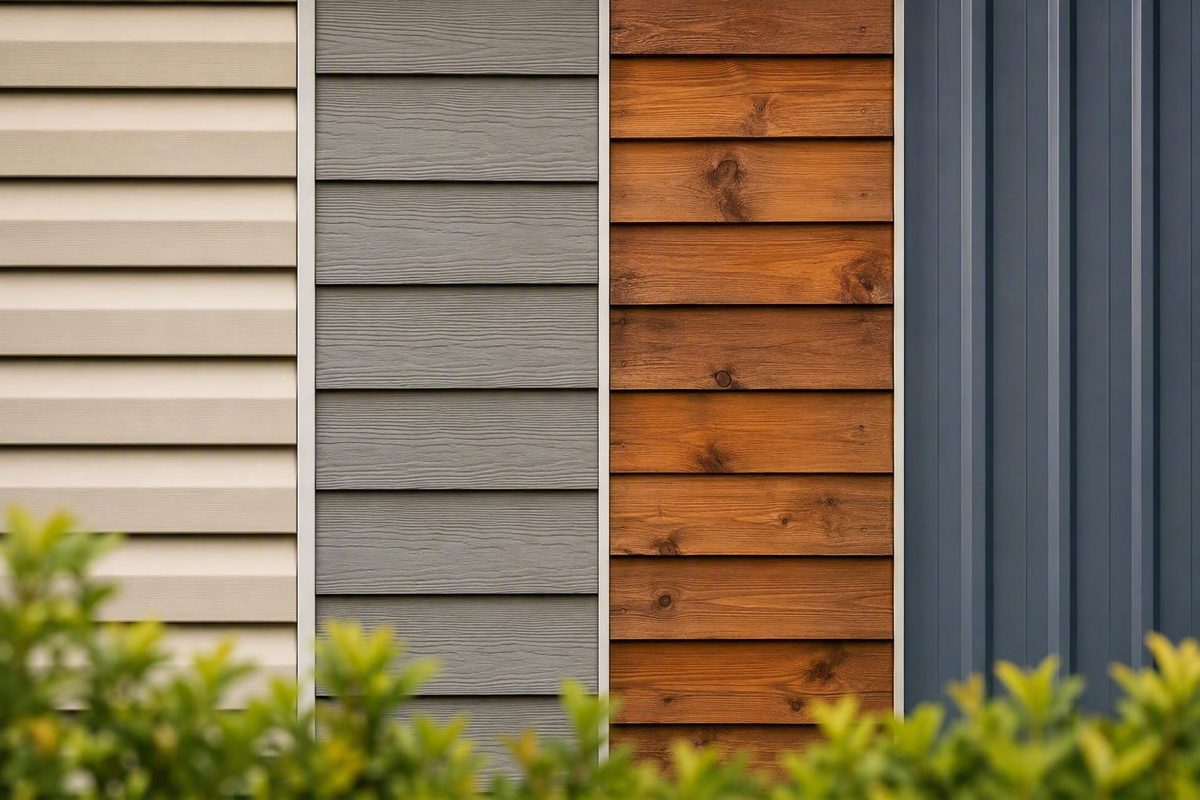
The short answer: choose by constraints, not by a universal winner
Vinyl siding is generally the practical choice when initial price, minimal finish maintenance, and relatively straightforward localized repairs lead the decision. Hardie Board merits closer consideration when you place more weight on non-combustible cladding, rigid construction, wood-like detailing, paint flexibility, or a long ownership horizon.
Vinyl is lightweight cladding made primarily from polyvinyl chloride, or PVC. Hardie Board is an informal name for James Hardie-branded fiber-cement siding made from cement-based ingredients and cellulose fibers. Hardie Board is a brand, not the generic name for every fiber-cement product. Other manufacturers make fiber cement, and their specifications, finishes, installation requirements, and warranties can differ. A vendor comparison describes these basic material distinctions while also reflecting a commercial interest in vinyl products (Alsco Metals’ material comparison).
Here is the high-level vinyl siding vs Hardie Board comparison:
| Factor | Vinyl siding | Hardie Board fiber cement |
|---|---|---|
| Initial installed cost | Usually lower when grade and scope are comparable | Usually higher because of material, handling, cutting, and finish demands |
| Weight | Lightweight and relatively easy to move | Considerably heavier and less forgiving during handling |
| Finish maintenance | Integral-color panels generally do not need repainting | Maintenance depends on whether the product is factory-finished, primed, or field-painted |
| Localized repair | Individual panels are often easier to replace, although matching can be difficult | Plank replacement can require specialized cutting, heavier handling, and finish matching |
| Fire behavior | Can deform or melt under sufficiently high heat | Characterized by supplied contractor sources as a non-combustible cladding option; not fireproof |
| Temperature movement | Expands and contracts, so installation must permit movement | More rigid, but still dependent on product-specific fastening, joint, clearance, and moisture details |
| Installation complexity | Lower weight, but flexible panels, flashing, and movement allowances require skill | More demanding handling, cutting, dust control, fastening, flashing, clearance, and finish work |
| Reported service life | Roughly 20–40 years | Roughly 30–50 years |
The service-life entries are contractor-reported planning estimates, not guarantees or authoritative national benchmarks. Home Genius Exteriors reports approximately 20–40 years for vinyl and 30–50 years for Hardie Board, while acknowledging that installation, exposure, and maintenance affect the outcome (reported cost and lifespan estimates).
The evidence available for this comparison comes largely from commercial contractors and vendors rather than neutral long-term studies or current product-specific technical documents. It can support broad tendencies and a homeowner decision framework, but it cannot establish one universally superior material, one national price, or one guaranteed service life. Before signing a contract, verify consequential performance, installation, fire, and warranty claims against current documentation for the exact proposed product.
A useful decision should pass through five filters:
- Complete local price: What does each bid cost after removal, repairs, trim, flashing, finish work, permits, and cleanup?
- Climate and fire exposure: Which hazards actually matter at your address?
- Maintenance tolerance: Are you willing to inspect coatings and applicable joints and repaint when needed?
- Appearance: Which named product, profile, trim package, and finish produces the result you want?
- Expected ownership period: Will you own the home long enough to value the higher-cost option’s particular advantages?
If you are not certain that either material is right, compare them with wood, metal, and engineered wood in Siding Spot’s broader guide to house-siding types, costs, lifespans, and failure modes.
Installed cost: vinyl usually starts lower, but project scope controls the final bill
The supplied contractor and vendor comparisons generally place vinyl below Hardie Board or generic fiber cement on initial installed cost. That directional conclusion is more defensible than any single national average.
For example, commercial installer Home Genius Exteriors reports approximately $4–$9 per square foot installed for vinyl and $8–$14 for Hardie Board. Energy Home Improvements reports approximately $3–$12 for vinyl and $5–$14 for fiber cement (its published comparison ranges). The ranges overlap substantially, even though both sources place vinyl lower at the entry point.
Do not blend these commercially reported figures into a supposedly precise national average. The sources may reflect different regions, dates, product grades, wall measurements, labor assumptions, and project scopes. Local bids can also reverse a simple category comparison when the products or included work are not equivalent. A premium vinyl proposal and a basic fiber-cement proposal, for example, are not the same comparison as entry-level vinyl versus factory-finished Hardie with extensive trim.
A useful siding quote separates four pricing categories.
1. Siding material
The bid should identify the exact manufacturer, product line, profile, grade or thickness where applicable, color, finish, and accessories. “Vinyl siding” and “Hardie siding” are not sufficiently specific descriptions.
Economy vinyl, premium vinyl, and insulated vinyl are different products. Primed Hardie, field-painted Hardie, and factory-finished Hardie also create different material, labor, and maintenance obligations.
2. Installation labor
Labor should include material handling, layout, cutting, fastening, fitting around openings, trim installation, finish work, and site protection. Ask whether painting is included and whether it covers siding, trim, cut edges, repairs, and other applicable components.
The work can involve additional carrying and staging, specialized cutting and dust controls, suitable fasteners, careful flashing and joint details, and finish work. Primed products can also require field painting.
3. Removal and disposal
Determine whether the contractor will remove the existing cladding or install over it. If removal is included, the quote should address labor, containers, hauling, disposal fees, and unexpected layers.
Tear-off is also when concealed sheathing, flashing defects, and water damage may become visible. An inexpensive proposal based on leaving existing material in place may not be equivalent to a proposal that includes removal and wall inspection.
4. Whole-project extras
Potentially omitted or variable costs include:
- Damaged sheathing or framing repairs
- Weather-resistive barrier replacement or integration
- Window, door, deck, and roof-to-wall flashing
- Specialty flashing at roof edges
- Corner boards and other trim
- Soffits, fascia, and vented components
- Exterior insulation
- Painting and finish preparation
- Permit and inspection fees
- Scaffolding or lifts
- Difficult site access
- Multiple stories and steep grades
- Decorative gables, bays, dormers, and other architectural complexity
- Electrical, plumbing, lighting, and exhaust penetrations
- Cleanup, landscaping protection, and final disposal
Do not multiply a headline square-foot rate by the home’s interior floor area. Two homes with the same interior floor area can have very different exterior wall areas and installation demands.
The most reliable comparison is a bid-normalization exercise. Give competing contractors the same written scope—or ask one contractor to provide true alternates—and require each price to use:
- The same measured wall area
- Comparable product grades
- The same tear-off and disposal assumptions
- The same sheathing-repair allowance
- The same weather-barrier and flashing scope
- Equivalent trim and soffit packages
- The same insulation assumptions
- A clearly defined finish
- The same permit and access requirements
- Equivalent cleanup and protection
- Itemized unit prices for likely change orders
If one contractor excludes painting and another includes a factory finish, their totals are not comparable. The same is true if one assumes sound sheathing while another includes repairs.
Maintenance, service life, and how each siding can fail
Commercial contractor estimates commonly place vinyl at roughly 20–40 years and Hardie or other fiber cement at roughly 30–50 years. Contract Exteriors reports a narrower 20–30 years for quality vinyl and 30–50 years for properly installed HardiePlank, illustrating how much estimates can vary (its longevity and repair comparison).
Treat these as screening ranges, not promises. Actual service life can change with:
- Product grade and finish
- Sun, wind, heat, cold, hail, and salt exposure
- Roof overhangs and splash-back conditions
- Installation quality
- Flashing and drainage
- Condition of the underlying wall
- Speed and quality of repairs
- Paint and joint maintenance
- Availability of matching replacement pieces
Vinyl maintenance and failure modes
Integral-color vinyl generally does not need repainting. Routine ownership usually involves periodic washing, visual inspection, and repair of damaged or loose pieces. Low finish maintenance does not mean no maintenance.
Possible vinyl problems include:
- Cracks or punctures after impact
- Loose or detached panels
- Buckling or waviness when thermal movement is restricted
- Heat-related distortion
- Open seams or displaced accessories
- Difficult color or profile matching after years of exposure
- Water entering behind the cladding through defective flashing or penetrations
These are possible failure modes, not inevitable outcomes. Panel grade, exposure, support, fastening, installation details, and impact severity all matter.
Hardie maintenance and failure modes
The phrase “Hardie Board maintenance” is incomplete unless the finish is identified.
Factory-finished Hardie arrives with a controlled finish, but it still needs inspection, cleaning, appropriate touch-up, and repair of damaged areas.
Primed or field-painted fiber cement relies on the coating system applied after installation. It may require repainting, touch-ups, and inspection of joints or caulk where those treatments are specified. The material name alone does not establish a repainting interval; preparation, coating quality, color, exposure, and local conditions all affect it.
Potential fiber-cement problems include:
- Chipped edges or faces
- Cracked boards
- Loose or misaligned planks
- Conspicuous or mismatched touch-ups
- Paint or coating deterioration
- Staining near fasteners or water paths
- Moisture-related swelling or deterioration where installation or finish conditions are deficient
- Larger repair areas when isolated boards cannot be removed cleanly
A contractor review of recurring Hardie installation errors identifies wet storage, excessive touch-up paint, deficient joint flashing, incorrect fastening, unsuitable fasteners, and inadequate clearances as potential contributors to appearance, attachment, or moisture problems (documented installation-error examples).
Fiber cement does not feed insects or decay in the same way as wood. That does not make the wall immune to moisture. The sheathing and framing behind either vinyl or fiber cement can deteriorate if roof runoff, window leakage, failed flashing, or a defective weather barrier admits water.
A practical inspection schedule
The timing should reflect the climate, current manufacturer instructions, and contractor guidance, but this side-by-side routine provides a useful starting point.
| Inspection task | Vinyl | Hardie or fiber cement |
|---|---|---|
| Cleaning | Wash as needed using a product-appropriate method | Wash as needed without damaging the finish |
| Loose or damaged pieces | Check for unlocked, bowed, cracked, punctured, or detached panels | Check for loose, chipped, cracked, swollen, or misaligned planks |
| Paint or finish | Watch for unusual fading, staining, or surface damage | Inspect paint, factory finish, cut edges, and touch-ups |
| Caulk and joints | Inspect sealant where specified around penetrations or accessories | Inspect caulk only where specified; check product-specific joint treatments and flashing |
| Penetrations | Check lights, vents, pipes, hose bibs, and electrical equipment | Check the same locations for gaps, finish damage, and water paths |
| Roof-to-wall areas | Look for displaced siding, staining, or runoff entering behind it | Check clearances, flashing, staining, and finish condition |
| Moisture warnings | Investigate soft walls, odors, staining, recurring dampness, or interior paint damage | Investigate the same signs rather than assuming the visible cladding is the only issue |
After major hail, wind, nearby fire exposure, roof work, or window replacement, inspect the affected elevations promptly.
Fire, storms, heat, cold, and moisture: compare the actual hazards
“More durable” is too broad to settle this comparison. Vinyl and fiber cement respond differently to different hazards, and the performance of the complete wall can matter more than the face material during a severe event.
Fire and nearby heat
The supplied contractor sources characterize fiber cement as a non-combustible cladding option, while stating that vinyl can deform or melt under sufficiently high heat. This gives fiber cement the stronger category-level fire case, but it does not establish the performance of every product or wall assembly (contractor-reported fire comparison).
Do not call fiber cement fireproof. A non-combustible siding product cannot guarantee that a wall or house will survive a fire.
Likewise, do not treat a “Class A” surface-burning statement as interchangeable with a non-combustibility claim. The supplied Utah contractor comparison applies those descriptions differently to the products it discusses, but it is not a substitute for the governing test report or current manufacturer documentation (the contractor’s product-specific discussion). For any safety-critical decision, require the contractor to identify the named product, test, components, and wall configuration supporting the claim.
Hail and impact
Vinyl may crack, puncture, dent, or develop holes under impact. Fiber cement may chip or crack. Neither description predicts what will happen to a particular product in a particular storm.
Compare:
- Product grade and thickness
- Available impact documentation for the exact product
- Substrate and support
- Installation method
- Exposure and elevation
- Availability and cost of matching repairs
- Insurance requirements
- Typical storm severity at the property
A product-specific classification is more useful than a broad claim that an entire siding category is “hail-proof.”
Wind
The supplied evidence does not establish a category-wide wind winner. Performance depends on the selected product, wall construction, attachment, edge conditions, exposure, and workmanship.
For vinyl, examine the fastening schedule, nailing hem, accessories, wall edges, panel engagement, and movement allowance. For fiber cement, examine plank or panel attachment, approved fasteners, edge conditions, joints, trim, and substrate. For both, the weather-resistive barrier and flashing must remain properly integrated.
Ask for documentation applicable to the exact product, wall construction, building height, exposure, and local design requirements. A wind claim for one premium product does not transfer automatically to every product made from the same material.
Heat and cold
Vinyl expands and contracts as temperatures change. It must be cut and fastened so panels can move rather than being clamped tightly against the wall. Restricted movement may contribute to binding, waviness, or buckling.
Commercial sources also associate vinyl with cold-weather brittleness and high-heat deformation, but the evidence does not support publishing one universal failure temperature. Formulation, panel grade, color, reflected heat, installation, and exposure differ.
Fiber cement is more rigid, but cold-climate performance still depends on moisture control. A board repeatedly exposed to water because of defective flashing, inadequate clearance, damaged finish, or poor drainage faces different conditions from a dry, correctly detailed board.
Moisture and freeze-thaw conditions
Fiber cement depends on sound finishes where required, appropriate clearances, suitable fasteners, correct joint treatment, flashing, and drainage. Deficiencies may contribute to staining, cracking, swelling, finish failure, or deterioration.
Vinyl sheds much of the rain that reaches its face, but it is not a waterproof wall. It does not repair rotten sheathing, replace flashing, or compensate for a defective weather-resistive barrier. Water that passes through joints or around openings still has to be managed behind the panels.
Regional hazards and constraints
In wildfire, hail, coastal, or severe-wind locations, obtain:
- Product-specific test documents
- Current installation instructions
- Local code requirements
- HOA or historic-district approval
- Insurance requirements or incentives in writing
- Confirmation that the proposed wall matches the tested or approved configuration
Regional contractors may reasonably weigh hazards differently, but their recommendations remain commercial judgments rather than universal climate findings. Local fire exposure, storm repair availability, salt, UV exposure, moisture, and maintenance capacity can all change the decision.
Appearance, insulation, and repairability
Both vinyl and fiber cement are available in multiple profiles, colors, and textures. Depending on the product line, choices can include horizontal lap siding, vertical or board-and-batten appearances, shingles, panels, and coordinated trim.
The usual visual distinction is rigidity. Fiber cement can support crisp shadow lines and wood-like detailing. Vinyl offers broad style choices, but its final appearance depends heavily on panel grade, seam placement, corner treatment, accessories, trim proportions, and installation quality.
“Premium appearance” is not an objective material property. A well-designed premium-vinyl exterior can look better than a poorly detailed fiber-cement installation. Color selection, window depth, transitions, trim width, rooflines, and workmanship may affect perceived curb appeal more than the generic material label. Resale preferences are similarly local and subjective.
Insulation
Standard vinyl and fiber cement provide little insulation by themselves. One commercial comparison reports standalone values below R-1 for both materials, while describing higher values for insulated vinyl or fiber-cement assemblies using added exterior insulation (reported insulation estimates).
These source-reported values are not promises of lower energy bills. Heating and cooling costs also depend on air leakage, attic insulation, windows, mechanical systems, climate, occupant behavior, and utility rates.
Insulated vinyl can add a continuous insulation layer behind the siding. A fiber-cement proposal may also be designed with compatible exterior insulation. In either case, ask the contractor to identify:
- The exact insulation product
- Thickness and reported thermal performance
- Attachment method
- Window and door integration
- Drainage implications
- Changes to trim and wall depth
- The complete wall design
Neither cladding should be sold as a substitute for air sealing or adequate wall and attic insulation.
Repairability
Individual vinyl panels are often easier and faster to replace. The complication is matching: an older panel may have changed in appearance, and its profile or color may no longer be available. A repair can be mechanically successful but visually obvious.
A damaged fiber-cement plank may require heavier handling, specialized cutting, careful removal around adjacent boards, and paint or finish matching. Brittle edges can make selective removal less forgiving. A paintable wall may, however, allow a broader section to be refinished when an exact factory-color match is unavailable.
Before choosing either system, ask:
- Is the profile commonly stocked locally?
- Will the contractor leave labeled spare pieces?
- Is the color or profile likely to remain available?
- Can one piece be replaced without dismantling a large section?
- Who performs small repairs?
- Is matching finish material available?
- What is the minimum service-call charge?
- Could repair work affect product or workmanship coverage?
Repair access and local inventory may matter more during ownership than a theoretical difference in nominal service life.
Installation quality can outweigh the material label
Siding is not simply a decorative surface attached to a wall. It is part of a system involving:
- Structurally sound sheathing
- A properly integrated weather-resistive barrier
- Window and door flashing
- Roof-to-wall and deck flashing
- Drainage paths
- Penetration details
- Trim and transitions
- Insulation and air sealing
- The cladding itself
Either vinyl or Hardie can disappoint when that system is deficient.
Different installation demands
Vinyl is light and flexible. That makes carrying and cutting easier, but long panels can be awkward and must be installed to permit normal thermal movement. Straight layout, correct panel engagement, secure accessories, suitable edge details, and proper flashing still require skill.
Fiber cement is heavier and more brittle during storage, carrying, cutting, and fastening. Poor handling can chip edges or break planks. Incorrect fastening can contribute to cracks, loose boards, gaps, or visible defects. Cutting and finish work also require product-appropriate tools and procedures.
Both are skilled installation projects. Vinyl is generally more approachable because of its lower weight, but that does not make it foolproof. Fiber cement is usually less forgiving of solo handling, improvised cutting, and incorrect fastening. Requirements for either product must come from the current instructions for the exact proposed system, not generalized online measurements.
Silica exposure during fiber-cement cutting
A contractor installation review warns that cutting fiber cement can release respirable silica dust and distinguishes that cutting exposure from normal occupancy after the siding is installed (fiber-cement cutting warning). Because the supplied source is a contractor article rather than an occupational-safety authority, use it as a prompt for verification rather than as the final safety specification.
Require the installer to follow current product safety information and applicable workplace requirements. Ask what cutting tools, dust controls, work practices, and protective equipment will be used. Do not accept uncontrolled dry cutting next to open windows, air intakes, vehicles, neighboring properties, or occupied areas.
Common Hardie installation problems
Contractor sources identify recurring problems involving:
- Wet or inadequately protected storage
- Incorrect fastener type, placement, or quantity
- Missing or deficient joint flashing
- Poor weather-barrier integration
- Missing flashing at windows, doors, decks, or roof intersections
- Inadequate product-specific clearances
- Incorrect joint or caulk treatment
- Damaged cut edges or poor touch-ups
- Misaligned courses
- Unsuitable cutting practices
Possible consequences include loose boards, gaps, staining, water intrusion, cracking, swelling, alignment defects, finish deterioration, or a larger repair scope. A New Jersey installer similarly associates deficient clearance, fastening, flashing, alignment, and weather-barrier work with attachment and moisture problems, while emphasizing product-specific instructions (installation-failure overview).
Not every failure proves installer error. Storm damage, product defects, building movement, roof leaks, deferred maintenance, and unrelated wall defects may also contribute. Diagnosis should follow the actual failure path rather than begin with an assumption.
Avoid relying on universal online measurements for fasteners, gaps, joints, caulk, or clearances. Requirements vary by product, profile, wall assembly, climate, jurisdiction, and publication date. The contract should require compliance with current instructions for the named product and applicable local requirements.
Questions for installer candidates
Ask each contractor:
- Which exact product and current installation instructions will you use?
- What recent experience does the assigned crew have with that product?
- Who supervises the installation each day?
- How will you inspect and repair sheathing?
- Which weather-resistive barrier is included?
- How will it integrate with existing windows and doors?
- How will roof-to-wall, deck, opening, and penetration flashing be handled?
- For vinyl, how will panels be fastened to permit thermal movement?
- For fiber cement, how will material be stored, carried, cut, fastened, flashed, and touched up?
- What cutting and dust-control practices will be used?
- How will product-specific clearances and joint details be documented?
- Will you provide progress photographs before cladding conceals the flashing and weather barrier?
- Who covers damage caused by installation?
- How long is the separate workmanship warranty?
- Who responds if a leak, loose panel, cracked plank, or visible defect appears?
The best installer is not necessarily the company making the strongest generic claim about one material. It is the company that can explain, document, and price the complete wall system.
Long-term value depends on your assumptions and ownership period
The supplied evidence does not establish a universal break-even point at which Hardie Board always becomes cheaper than vinyl. A lifetime-cost result can change completely when repainting, repair, financing, replacement, and ownership assumptions change.
A 10-, 20-, or 30-year comparison should include:
- Initial complete installed cost
- Financing charges
- Cleaning
- Paint and finish work
- Caulk or joint maintenance where applicable
- Localized repairs
- Storm deductibles or uninsured work
- Expected replacement timing
- Inflation in future labor and materials
- Length of actual ownership
Use this worksheet:
Ownership-period cost = initial complete project cost + expected maintenance costs + expected repair costs + expected replacement costs + financing costs − substantiated residual benefits
Run at least three scenarios: optimistic, expected, and adverse. Do not subtract a resale premium unless local market evidence provides a defensible basis. Even then, treat it as uncertain rather than guaranteed.
A Utah contractor’s 20-year model illustrates how assumptions drive the result. It estimates approximately $37,000 for Hardie and $29,200 for the compared Alside product, but the Hardie total assumes two repainting events of about $5,000 each, and the replacement probabilities come from the contractor’s own field experience rather than actuarial data (model and disclosed assumptions). The model also focuses on a particular competing cladding rather than every conventional vinyl product, so its result should not be generalized.
A homeowner planning to move within several years may not recover Hardie’s higher initial cost. That does not make Hardie a poor product; it means the owner may leave before receiving much value from the characteristics that motivated the premium.
A long-term owner may value rigidity, paint flexibility, wood-like detailing, or non-combustible cladding even without a provable financial payback. Those benefits can matter to the owner, but they should not be presented as a guaranteed investment return.
Resale is particularly uncertain. Buyer preferences, housing inventory, neighborhood norms, project age, color, workmanship, and local appraisal practices can all affect the outcome. Calculate scenarios from actual bids and a realistic ownership period rather than relying on category averages.
Decision matrix and contractor-quote checklist
The following matrix gives each material a conditional edge, not an unconditional victory.
| Your priority or constraint | Conditional edge | Why |
|---|---|---|
| Lowest complete initial bid | Vinyl | Vinyl generally starts lower when scope and grade are comparable |
| Avoiding repainting | Vinyl | Integral-color panels generally avoid routine repainting |
| Simpler localized repair | Vinyl | Individual panels are often easier to replace |
| Short expected ownership period | Vinyl | There may be less time to value Hardie’s higher-cost attributes |
| Non-combustible cladding | Hardie | Supplied contractor sources give fiber cement the stronger category-level fire case |
| Rigid, wood-like detailing | Hardie | Rigid planks can support crisp profiles and trim relationships |
| Future color flexibility | Hardie | Paintable products allow broader color changes, with added maintenance |
| Long ownership horizon | Depends; Hardie merits closer study | A longer period gives more time to value rigidity and fire performance but does not guarantee financial payback |
| Minimal finish maintenance | Vinyl | Hardie obligations depend on whether it is factory-finished, primed, or field-painted |
| Existing moisture damage | Neither—investigate first | New cladding should not conceal damaged sheathing or defective flashing |
Do not make the final selection until you have checked:
- Existing moisture and sheathing conditions
- Local fire and wind requirements
- HOA restrictions
- Historic-district rules
- Insurance requirements
- Product availability
- Local repair capability
- Current product-specific instructions
Where practical, request separate alternate bids for:
- Named standard or premium vinyl
- Insulated vinyl
- Primed or field-painted Hardie
- Factory-finished Hardie
This exposes false comparisons, especially when one price includes insulation or painting and another does not.
Contractor-quote checklist
Each bid should identify:
- Exact manufacturer and product line
- Profile, grade, finish, and color
- Measured cladding area and elevations
- Waste assumption
- Removal of each existing layer
- Disposal and hauling
- Sheathing inspection and repair allowance
- Weather-resistive barrier product and scope
- Window, door, deck, and roof flashing
- Penetration details
- Corner, window, door, and transition trim
- Soffits and fascia
- Exterior insulation, if any
- Factory or field finish
- Surface preparation and included finish coats, if applicable
- Permits and inspections
- Scaffolding, lifts, and access charges
- Landscaping and property protection
- Daily and final cleanup
- Start and completion expectations
- Change-order unit prices
- Payment schedule
Warranty checklist
Obtain the current documents for the exact product and market. Confirm:
- Product coverage
- Separate finish coverage
- Exclusions
- Proration
- Transferability
- Registration requirements
- Installation conditions
- Maintenance obligations
- Claim procedure
- Who supplies replacement material
- Whether labor is included
- The contractor’s separate workmanship warranty
- Who handles a disputed product-versus-installation claim
Do not rely solely on a salesperson’s summary of a “lifetime” or multidecade warranty. Coverage may be limited, prorated, conditional, or restricted to materials.
Pre-final-payment inspection
Before making the final payment, walk every accessible elevation and check:
- Straight, consistent alignment
- Secure panels or planks
- Chips, cracks, punctures, dents, or broken edges
- Visible touch-ups and finish damage
- Flashing at windows and doors
- Roof-to-wall and deck intersections
- Utility and ventilation penetrations
- Product-appropriate clearances
- Caulk only where specified
- Unfinished cuts or exposed areas
- Debris, fasteners, dust, and equipment removal
- Spare labeled material
- Permit closeout
- Product, finish, and workmanship documents
- Progress photographs of concealed wall details
End the decision process with four questions:
- What is the complete bid difference after equivalent scope and product grade?
- Which local hazard matters most at this house?
- Will you accept future painting and finish maintenance?
- How long will you realistically keep the property?
Frequently asked questions
Is Hardie Board the same thing as fiber-cement siding?
No. Hardie Board is an informal name for James Hardie-branded fiber-cement siding. Fiber cement is the broader material category, and other manufacturers can produce it.
Treat each manufacturer and product line separately because composition, finishes, profiles, testing, installation instructions, and warranty terms may differ.
Does Hardie Board always last longer than vinyl siding?
No. Commercial contractor estimates commonly place Hardie or fiber cement at roughly 30–50 years and vinyl around 20–40 years, but those figures are planning ranges rather than guarantees.
A suitable, well-installed vinyl product may outlast a poorly detailed fiber-cement wall. Product grade, exposure, water management, installation, maintenance, repair timing, and finish condition can all change the result.
Does either vinyl siding or Hardie Board improve insulation?
Standard vinyl and fiber cement provide little insulation by themselves. Insulated vinyl can add continuous insulation, while a fiber-cement wall can be designed with compatible exterior insulation.
Neither cladding substitutes for air sealing or adequate wall and attic insulation, and neither guarantees a particular reduction in energy bills.
Can Hardie Board be installed over existing vinyl siding?
A contractor may propose installing new cladding over existing material, but that does not establish that an overlay is suitable for a particular house. Existing vinyl can conceal damaged sheathing, failed flashing, old layers, or an unsuitable substrate. It can also complicate window, door, roof, trim, and clearance details.
For a vinyl-to-Hardie conversion, removal is often the clearer way to inspect the wall and establish a suitable base. Require the contractor to explain the proposed assembly, attachment, flashing integration, code compliance, manufacturer approval, and warranty implications before accepting an overlay.
Which siding is easier to repair after storm or impact damage?
The main problem is matching an older, faded, or discontinued color and profile.
Fiber-cement planks can also be replaced, but the work may involve heavier handling, specialized cutting, careful removal, and paint or factory-finish matching. Damage near flashing, trim, or several courses may require a larger repair with either material.
The bottom line: Vinyl siding vs Hardie Board is not simply cheap siding versus premium siding. The materials create different obligations involving initial price, finish maintenance, repair, fire behavior, appearance, and installation. Either can disappoint when flashing, drainage, sheathing, or workmanship is deficient. Compare named products under equivalent scopes, verify local hazards and rules, calculate costs over your realistic ownership period, and choose the system whose complete obligations—not merely its headline price—fit your home.