
Canada’s 50% Tariff May Hit Some Cedar Siding
Coverage depends on the full HTSUS code, construction, declared origin, customs entry date and any documented exclusion—not the retail label.
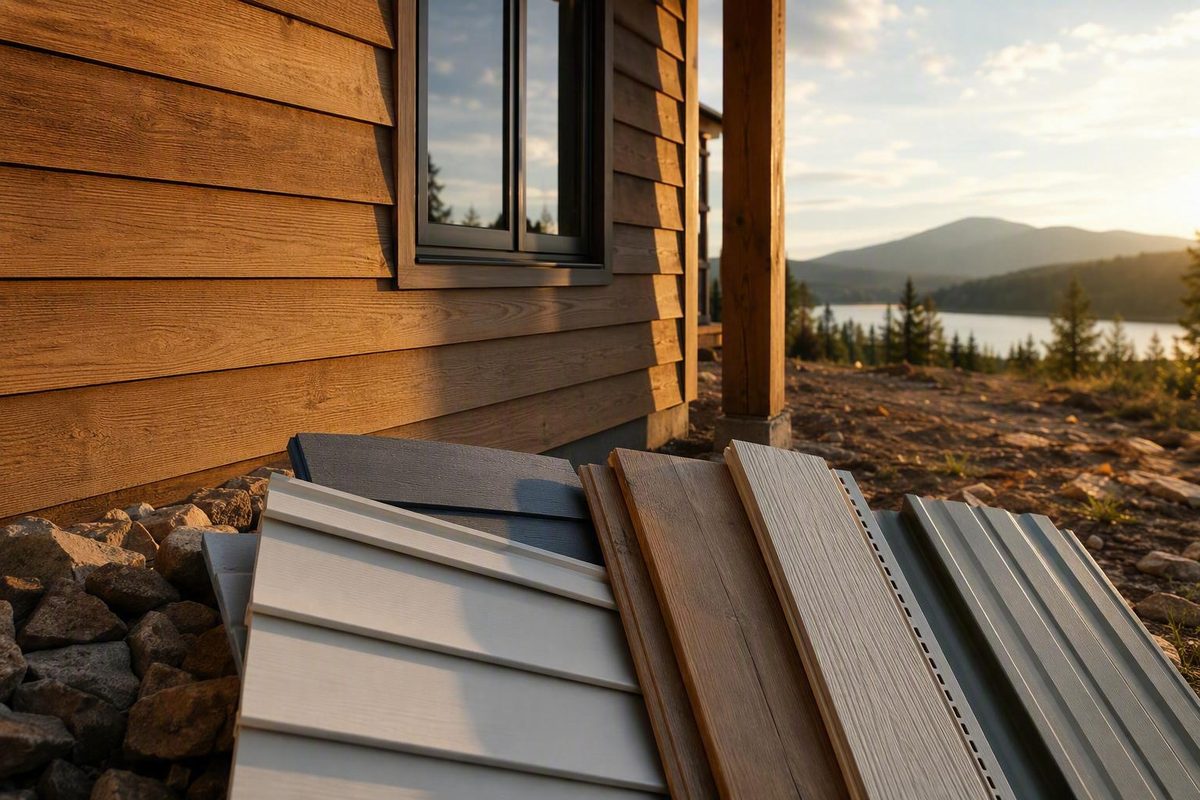
Verdict: Potentially yes, but the retail label “cedar siding” is not enough to determine coverage.
This is an additional U.S. tariff on selected imports from Canada, not a tariff imposed by Canada. Whether it applies to a shipment depends on the product’s exact HTSUS classification, construction, declared origin, customs entry date, and any applicable exclusion. This article cannot provide a binding classification; the importer or its customs broker should verify the treatment used on the entry.
The short answer: cedar siding is not categorically covered
The additional 50% duty is product-specific rather than a blanket charge on every Canadian product. The July 2026 policy announcement identified several excluded categories, confirming that Canadian origin alone did not place every good within the measure.
CBP’s August classification schedule placed continuously shaped wood lines 4409.10.40, 4409.10.50, 4409.10.90, and 4409.29.91 under the 50% headings. It also included specified fiberboard, plywood, and veneered-panel classifications under headings 4411 and 4412. However, the official CBP classification list does not expressly name cedar siding, cedar clapboards, shakes, or shingles.
That distinction matters because customs coverage is organized by HTSUS classifications, not the general description on a showroom sample or contractor proposal. Products marketed as cedar siding can differ substantially in form and construction. A solid profiled board, a shake, and a layered panel should not be assumed to share one classification.
For a shipment-level answer, obtain:
- The complete commercial product description
- Construction and processing details
- Dimensions and profile
- The complete HTSUS code used on the customs entry
- The country of origin declared on that entry
- The date the goods were entered or withdrawn from warehouse
- Documentation supporting any exclusion or other tariff treatment
“Canadian cedar” or “Canadian lumber” is not enough information to verify a surcharge.
Why the type of cedar product changes the answer
CBP’s list covers tariff classifications rather than retail product categories. Some continuously shaped wood, fiberboard, plywood, and veneered-panel lines appear on the 50% list, but the available evidence does not establish which code applies to every form of cedar siding.
| Product sold as cedar siding | Classification-relevant details | Documentation to request |
|---|---|---|
| Solid clapboard or bevel siding | Solid construction, dimensions, taper, edge treatment, and processing | Commercial description; dimensions and profile; confirmation that it is solid; declared origin; HTSUS code |
| Tongue-and-groove or other profiled boards | Whether and how the board is shaped along an edge, end, or face | Description; dimensions; profile drawing; solid-or-layered construction; declared origin; HTSUS code |
| Shakes or shingles | Product form, manufacturing method, dimensions, and processing | Exact product name; shake or shingle specification; dimensions; construction; declared origin; HTSUS code |
| Plywood or veneered panels | Number and type of layers, core material, face veneer, and overall construction | Technical data sheet; layer and core description; dimensions; declared origin; HTSUS code |
| Fiberboard products | Composition, density, facing, machining, and finishing | Product data sheet; composition and density; dimensions and profile; declared origin; HTSUS code |
| Engineered or composite cedar products | Whether cedar is solid, a veneer, a facing, or one component of a composite | Construction description or bill of materials; layer details; dimensions and profile; declared origin; HTSUS code |
This is a document checklist, not a classification guide. Assigning a tariff code from a homeowner-facing product name alone would be unreliable and could produce the wrong customs conclusion. Ask the importer or customs broker which complete classification was used and what product details supported it.
Broad reports that Canadian “lumber” or “plywood” is affected do not establish that a finished cedar-siding shipment is covered. A profiled siding board should not automatically be treated like rough lumber, and a shake should not be assumed to receive the same treatment as a plywood or veneered panel.
The same caution applies to engineered products. Cedar may be the solid material, a face veneer, or only one part of a layered assembly.
The dates that determine which tariff list applies
The relevant list depends on when the goods were entered or withdrawn from warehouse—not simply when the homeowner ordered, paid for, or received them.
| Date | What changed |
|---|---|
| July 20, 2026 | The White House announced 50% tariffs on a range of Canadian imports under Section 338, while identifying several excluded categories. The July White House fact sheet did not identify cedar siding or classify individual cedar products. |
| August 22, 2026, at 12:01 a.m. Eastern | Covered goods entered or withdrawn from warehouse became subject to the additional duties under CBP’s implementation guidance. |
| September 15, 2026, at 12:01 a.m. Eastern | A modified list took effect, adding 122 classifications and removing some others, according to CBP’s September bulletin. |
The July announcement established the broad policy but did not provide a shipment-level answer for cedar siding. CBP’s later material supplied the classification schedule and entry-date instructions.
The September bulletin indicates that the shaped-wood and panel lines shown as pre-existing entries—including the previously listed 4409.10 lines and classifications under 4411 and 4412—remained on the modified schedule. That should not be shortened to a claim that every product within the broader 4409.10 subheading is covered; the complete tariff line still matters.
The White House separately reported that the September modifications removed products including rock salt and cement, effective September 15. The September fact sheet illustrates why a quote or article prepared before the modification may not reflect the operative scope.
Ask for the customs entry date rather than relying on the order, invoice, delivery, or contract date.
How to verify a tariff surcharge on a siding quote
Before accepting a line item labeled “Canada tariff,” “50% tariff,” or “import adjustment,” ask the supplier or contractor for:
- Exact product and construction: Is it a solid profiled board, shake, shingle, plywood, veneered panel, fiberboard product, or composite?
- Declared country of origin: What origin appears—or is expected to appear—on the customs entry?
- Complete HTSUS code: Which classification was used for this shipment?
- Customs entry date: When were the goods entered or withdrawn from warehouse?
- Duty documentation: What entry summary, broker statement, supplier invoice, or other record supports the charge?
- Exclusion analysis: Is the importer claiming an exclusion or different tariff treatment, and what entry documentation supports that position?
- Charge status: Was the duty assessed on goods that have already entered, or is the amount a provisional allowance for a future shipment?
- Reconciliation terms: If the allowance is provisional, will the final invoice be reduced or refunded if the amount assessed differs?
Request the entry documentation rather than drawing a conclusion from the supplier’s location.
The quote should also separate:
- Base material price
- Assessed tariff or provisional tariff allowance
- Freight and delivery
- Waste allowance
- Factory or field finishing
- Distributor or contractor markup
- Installation labor
Separating these amounts prevents a duty on imported goods from being presented ambiguously as a percentage of the entire siding project.
For shipment-specific questions, start with the importer of record or its customs broker. A contractor can explain its pricing, but a statement such as “all Canadian cedar is tariffed” is not a substitute for the classification and entry records.
A 50% duty does not mean a 50% larger siding contract
CBP describes the measure as an additional 50% ad valorem duty under specified Chapter 99 headings. It is not automatically a 50% charge on the homeowner’s full installed contract.
Hypothetical arithmetic
Assume, solely for illustration:
- Amount used in the hypothetical customs calculation: $10,000
- Additional duty rate: 50%
- The product is covered
- No exclusion changes the result
Then:
$10,000 × 50% = $5,000 additional duty
This example does not determine which invoice or transaction amount constitutes customs value, and it is not a cedar-price forecast. Other applicable duties or charges could change the import cost.
A simplified homeowner-price formula is:
Imported material + duty passed through + freight + waste + finishing + markup + labor = installed price
Tariffs are paid at importation, but the available evidence does not establish a universal pass-through rate for cedar siding. Suppliers and contractors may pass through all, part, or none of a particular cost, and a quote may also reflect anticipated replacement cost rather than the duty collected on that specific shipment. A general explanation of tariffs as taxes paid by importers appears in this report on the Canadian-goods measure.
CBP also says the additional duty applies in addition to any antidumping, countervailing, or other duties that are otherwise applicable. That does not mean those duties apply to a particular cedar shipment; it means the Section 338 duty does not automatically displace them.
If the revised quote no longer fits the budget, compare siding alternatives by installed cost, maintenance, expected lifespan, moisture behavior, and common failure modes—not tariff exposure alone. An alternative absent from this particular list may still have other import costs, and a cheaper material can carry different maintenance or durability tradeoffs.
Does USMCA compliance automatically exempt Canadian cedar siding from the additional duty?
USMCA compliance alone does not establish that a shipment is exempt. A building-products trade association reports that USMCA-compliant goods appearing on the new tariff lists remain subject to the additional duty, while Canadian softwood lumber and certain other wood products already receiving Section 232 treatment are excluded from the new Section 338 duty. Its tariff summary does not determine whether a specific cedar-siding shipment falls within either category.
Ask the importer or customs broker to identify the complete classification and document the basis for any USMCA, Section 232, or other exclusion claim.
Are vinyl, fiber-cement, and aluminum siding exempt because their cited classifications are absent from this CBP list?
Not necessarily. The CBP classification schedule does not identify vinyl siding by name and does not include fiber-cement sheet heading 6811 or the reviewed aluminum-related lines under 7610 and 7606. Their absence from this particular Section 338 list does not prove that products sold under those names are correctly classified there or that they are free from every tariff, trade remedy, or customs issue.
Verify the exact classification, declared origin, entry date, and current treatment of an alternative material just as you would for cedar.